Showing posts with label Education. Show all posts

Sunday, July 27, 2014

Equivalent Fractions Fly Swatter

Equivalent Fractions Fly Swatter
by Learning is the Game™


I originally created this game for a friend of mine, Heather Q of My Clever Endeavors, who teachers fifth grade.  She saw my Fly Swatter Dolch Sight Words game and asked if I could make something similar for her with equivalent fractions.  We all know equivalent fractions can be tough for our students.  It can also be difficult to find engaging hands on activities we can use with our students that get them excited about working with equivalent fractions.  So, I was happy to help out.  My friend has found her fifth graders still need plenty of practice with equivalent fractions even though the Common Core State Standards addressed in this game are for third and fourth grade:

                                   CCSS.MATH.CONTENT.3.NF.A.3.A
                                   CCSS.MATH.CONTENT.3.NF.A.3.B
                                   CCSS.MATH.CONTENT.3.NF.A.3.C
                                   CCSS.MATH.CONTENT.4.NF.A.1

You will need the following:

-Equivalent Fractions Fly Swatter
-Soft Velcro dots
-Rough Velcro strip
-Flyswatter

How to Assemble:

-Print out the flies double sided (lengthwise) on cardstock and laminate
-Cutout the flies on the dotted line
-Attach soft Velcro dots where the wings connect
-Attach rough Velcro strip to a clean flyswatter


This game is printed double sided so students can self-check.  The self-checking ability is helpful since this game works best in pairs or small groups.  On the front, with the picture of a fly, is a fraction not in lowest terms.  On the back is the equivalent fraction in lowest terms.  For instance, 2/4 on the front and 1/2 on the back. 

How To Play The Game
Choose the fractions you want your students to use.  This activity includes 90 flies with different fractions.  Fractions reduce to the following lowest terms:  1, 1/2, 1/3, 1/4, 1/5, 1/6, 1/7, 1/8, and 1/9.  Then, spread them out on a table or the floor.


In pairs or small groups players take turns.  During a turn the player first identifies a single fly and reads the fraction shown.  Then, the player swats the fly with the fly swatter and says the corresponding equivalent fraction in lowest terms.


The player then turns over the fly swatter to reveal the back of the fly to see if he or she was correct. 


If correct, the player removes the fly and places it in his or her pile and the next player goes.  If the player is not correct the fly goes back in play, face up, and the next player continues the game.  The game ends when all of the flies are gone.

This activity is great for small groups, math centers, or when a few students have finished their work early and you need to keep them working on something educational!


If you are interested in this activity you can check out the free preview here!

If you have any questions, or have used something similar leave a comment, I'd love you hear from you!

For more games and activities be sure to Follow on Bloglovin  and:


Wednesday, February 26, 2014

The sale you have been waiting for!

720 × 90

Teachers Pay Teachers is celebrating reaching 3 million members!  Because of this they are running a site wide sale.  

Save on EVERYTHING from 2/27-2/28!
Sale runs 2/27 12:01 am ET - 2/28 11:59 pm ET

Here's How It Works:
  • Use promo code TPT3 for 10% off everything except gift certificates
  • Save even more Learning is the Game will be joining the sale by offering an addition 20% off all of the items in our store.  This will result in a 28% savings of everything we have to offer!
  • Fill your cart! Sale is ON Thursday 2/27/14 12:01 a.m. ET through 2/28/14 11:59 p.m. ET
Don't forget to enter promo code: TPT3
when you check out to save!

Follow on Bloglovin

Thursday, January 23, 2014

Short Vowel Sound Sort and Write

Short Vowel Sort and Write
by Learning is the Game™


This activity is more than just a short vowel sound sorting activity.  For starters, it gives your students a valuable hands on activity that is engaging and fun.  Since your students are actually creating something, they will have a visually pleasing graphic organizer that both of you can refer back to as the year goes on.  This activity also includes a writing element.  Once students have correctly sorted the words according to their short vowel sounds, they will write sentences using those words.

 Here is how I use this activity, but of course you should use it whatever way works best for you.

Prep
             Print pages 3-5 for each student.  Be sure to print them double sided!

Step 1-Intro   
             Introduce/review the short vowel sounds in a way that fits your teaching style.  It is a good idea to also review the words the students will be sorting since they will need to use some of them in their writing.


Step 2– Color
Each vowel sound is assigned a color.  Color the tabs and boxes with the vowels and short vowel symbols.  Then, color the words in the boxes (shown below) with the corresponding color.  Example: If the boxes with the A a and ă were colored blue, the box with the word map and other short a words should also be colored blue. 
*I like to have my students color the words because I can quickly check to make sure they are identifying the words correctly before they start cutting and gluing.  I also suggest doing all of the coloring before any cutting because it is harder/messier when done after.

Step 3-Fold and cut
Look at the side with the dotted line.  Fold on the dotted line, and cut on the solid lines. 

Step 4-Cut and glue
Cut out the words, and glue them in the boxes next to the matching short vowel sound symbol.

Step 5– Write
On each line provided write a complete sentence using the short vowel words in that box.  Circle the words you used with the corresponding color.


This is a fun activity that can be used with any students just learning about short vowel sounds, especially K-2nd graders.  I have even used this with my upper elementary English language learners with great success. 

I know my students and I have enjoyed it, and I hope you and your students do too!

Common Core State Standards practiced. 

CCSS.ELA-Literacy.L.K.2a
CCSS.ELA-Literacy.L.K.2b
CCSS.ELA-Literacy.L.K.2c
CCSS.ELA-Literacy.RF.1.2 a
CCSS.ELA-Literacy.RF.1.2 b
CCSS.ELA-Literacy.RF.1.2 c
CCSS.ELA-Literacy.RF.1.2 d
CCSS.ELA-Literacy.L.1.2b
CCSS.ELA-Literacy.RF.2.3a

CCSS are printed on the back of the foldable.

Click here for a FREE preview.  It has some directions and suggestions on how to use this activity in your class.

Here is my post for my Long Vowel Sort and Write Silent-e.


Follow on Bloglovin

Sunday, November 3, 2013

20% Off Veteran's Day Sale Sunday-Tuesday!


In honor of Veteran's Day I am throwing a SALE at my Teachers Pay Teachers store.  Next Sunday-Tuesday, everything in my store will be 20% off, so take a look.  There are great items all at discounted prices, many featured on this site, as well as some cool free items too.  Who doesn't like free stuff right?  


I hope you find something you like!


Follow on Bloglovin

Monday, October 7, 2013


Here is a picture preview of the newest Peek-a-Boo!  Peek-a-Boo! Place Value: whole numbers.


Follow on Bloglovin

Tuesday, August 27, 2013

Peek-a-Boo! CCVC and CVCC Blends


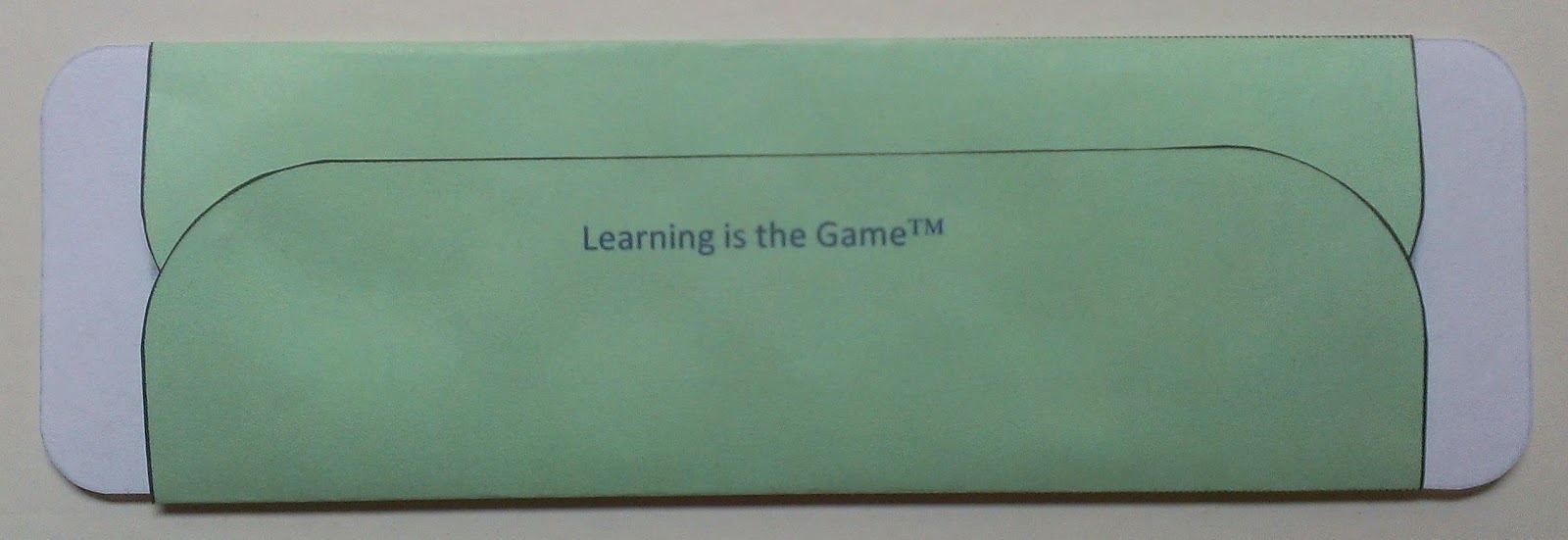
Peek-a-Boo! for CCVC & CVCC blends is an activity I created for my ESL students to help them work on blends.  It also helps them see the different sounds in a word, and how those sounds come together to create one whole word.  In this activity students open one flap at a time and say the sound under each flap.  Once they are successful making the sounds under all three flaps they reveal the whole word under the larger flap on the right.  Breaking down the word visually is less intimidating to my beginning readers so they feel more comfortable tackling these larger words.


The hands on experience is beneficial to my ESL students, but can also help native English speakers who are just learning to read.  Students of all backgrounds enjoy sliding in a new card and "peeking" into each flap. The sleeves are easy to cutout and create, and come with picture guided direction.  If you are interested in checking out this item you can get a FREE Sample here.

Common Core Standards practiced:
ELA-Literacy.RF.1.2b
ELA-Literacy.RF.1.2c
ELA-Literacy.RF.1.2d


I’d love to hear from you!

What do you think about this activity?

Do you use something similar?

What other activities do you use to practice CCVC and CVCC blends in your classroom?


Follow on Bloglovin

Sunday, August 18, 2013

Add a little more education to board games with counters!

You don’t have to use dice when playing board games!

Using dice when playing games is fine, if your school allows it, but next time consider using counters instead.  Whether you are playing an educational game, or a game just for fun, using counters is an easy way to sneak in a little extra learning. 

I started using counters one day when I realized none of my 5th grade ESL students knew how to read roman numerals.  I decided to take that opportunity to teach a quick lesson on the basics.  I already planned on playing a game that day so, instead of using dice, I wrote out I-VI on pieces of paper and had my students draw them out of a hat.  As we played the game some of the students had trouble remembering how much IV and VI were.  This gave the students an opportunity to discuss the two numbers, how roman numerals work, and the opportunity to teacher each other.  After that day I never went back to using dice.


Roman numerals are just one way you can use counters to practice content.  With younger students you might simply use the numbers themselves, hash marks, or dots they have to count.  You can also use equations that equal numbers 1-6 to practice addition, subtraction, multiplication, division... etc.    The possibilities really are endless. 


Reasons not to use dice
·         Some schools discourage or even ban the use of dice because of their association with gambling.
·         $ As a teacher I am always trying to save $ and stretch my classroom budget as far as I can.  
·        Dice are like socks.  Half of them always seem to magically disappear when you need them.  At school and at home.

Reasons to use counters
·         $ Counters can be virtually free!  Just put whatever you want on a piece of paper and cut it out.
·         Easy to replace.  If you make them on the computer you can just print them out again and again.  This comes in handy if they start to resemble socks and dice.
·         Adaptability.  You can make counters that cover a variety of topics and objectives.
·         Easy to make and use

Using counters is easy
Just cut out the set you want your students to use and put them in a hat, bowl, or other container.  I’ve found a plastic margarine container with a lid works well.  That way I can also use it to store the counters and game pieces when I’m not using them.   Instead of rolling a die, one player shakes up the container and holds it so the current player cannot see inside.   Then the current player picks a counter from the container and moves that many spaces.

To get a FREE copy of the counters above just go to my Teachers Pay Teachers Store or my Teacher Lingo Store.  Why not get rid of the dice and squeeze in a little more education with counters?  When I play games with my students I always use counters and my students love them.  

Follow on Bloglovin

Monday, August 12, 2013

Summer Vacation Prezi for Students


As summer begins to wind down, I thought I would play around with a new presentation tool I heard about at the MABE conference last spring, Prezi.  Some of you may have heard of Prezi, but if you have not, it is a free online presentation program that blows power point out of the water!  Unlike PowerPoint, which presents slides in a linear fashion, Prezi gives the creator a much more dynamic environment to work with resulting in a more interesting experience for the viewer i.e. my students.  The basic Prezi account is free, but educators with a school email can also get a free upgrade that gives you five times more storage, your own logo, and the option to make your presentations private.  I’m a big fan of keeping my presentations private since I may be making future Prezis with my students, or with pictures and names of my students.  I’m not really sure to what extent I will be incorporating Prezi into my lessons, but knowing they will not be available to the public gives me many more options. 
     As with any new program there was a slight learning curve as I adapted to this new paradigm of presentations and tested out how the program itself.  After playing around with the program for about 20 minutes I felt comfortable with the basics and decided to get started on a real Prezi.   Since I’m sure I will be discussing what I did this summer with my students, I decided that would be the topic of my fist Prezi.  I quickly found a template I thought was appropriate for my topic and got started.  Once I learned the basics it was really pretty easy and to be honest kind of fun making my presentation.  It’s not much, but here is my first Prezi, Mr. Van Over’s Summer.


If you are interested, I encourage you to check out the site.  My presentation only scratches the surface of the cool things you can do with Prezi.  I think your students will enjoy it and so will you.  Don’t forget to get the educator upgrade.  It’ free and only takes an extra minute to setup.

I’d love to hear from you!
Do you already use Prezi?  If so, what do you think?

How do you plan to use Prezi in your classroom this year?

Follow on Bloglovin

Wednesday, July 24, 2013

I have... Who has...


          Educational games can be, and should be, used in just about every classroom.  Games help students of all ages become more engaged, excited about learning, and willing to take on new challenges.  I have… Who has… is no exception.  One of the things I like about this game is the flexibility I have as the game creator.  Using the same basic platform, I can create a game that will help my students practice almost any subject.   Once my students have learned how to play one deck of I have… Who has… they already know how to play any other deck regardless of the content being covered since the rules don’t change from one deck to the next.  
       

         When I make a deck of I have… Who has… cards I make a deck of 30 because my classes are usually large.  With 30 cards I will have a few extra cards so some students can have two.  I also make sure there are one or two cards that are easier than the rest.  This way I can make sure my students who are really struggling with the content get the easier cards the first few times we play so they can be successful in front of their peers.  

As you can see in the pictures above, the front of each card has two parts.  I have… and Who has…  When it is your turn simply read the whole card.  You know it is your turn because someone has asked a Who has… section that is answered by your I have… section.  The cards are written in a way that the cards create a continuous loop. 


How to Play

·      Distribute at least one card to each student.  Handout any extra cards to stronger students, or to students who want another card that you think can handle it.  I always have students who want extra cards.  If you have students who are really struggling with the content make sure they get the easier cards the first few times. 

·        Pick any number in the deck and have the student with that card start.  The back of each card has a number in the lower right hand corner (see pictures above).  It does not matter what card you start with because the game loops continuously and ends when you want it to end.  I prefer to stop when it goes all the way around once, redistribute the cards, and play again it time permits.

·         Students need to be silent and focused throughout the game. 

Example: Sally reads, “I have… 6 Who has… 9-0”.  Jose’s cards reads “I have…9  Who has… 1-1”.  His card answers the question correctly so it is his turn.  Jose reads his whole card and the game continues. 

Being silent and focused can be a struggle for many students.   When playing I have… Who has… students are practicing more than just the content covered in each deck.  To be successful in the game, students will have to improve their listening and comprehension skills.  Students will also learn self-control and patience as they wait for students to figure out the answers and realize it is their turn.  These are just a few of the extra benefits students receive from playing I have… Who has… These “extra” benefits are part of the reason why I prefer playing games like this in my class instead of using worksheets all of the time.

Follow on Bloglovin

Wednesday, July 10, 2013

Learning should be fun: Why games need to be a part of your classroom -Part 1

               We all know common core places a large emphasis on student practice, and educational games can be a great way to achieve just that.  Whether your students are working as a class, in small groups, or on their own, games are a great way to help them practice and learn anything you are covering in class.  Incorporating games in your class/lesson is important not only because they help students learn information, games also get students excited about learning, keep them engaged longer, and help lower the affective filter.

                Educators understand that students must have their most basic needs met before they are able to learn.  Creating a safe and comfortable environment for all students is the first job of any successful teacher.  According to Krashen (1982) a low affective filter, which includes high motivation, high self-confidence, and low anxiety, is highly beneficial to language acquisition.  While Krashen focused primarily on language acquisition, I truly believe the same principles hold true for all learning.  Tomlinson et al, (2003) would agree with me.  They found when multiple materials and strategies coincide with an individual’s learning styles and interests, the affective filter will be lowered and thus students will be more willing to participate. 

                Sometimes it can be a struggle trying to differentiate our lessons to address the different learning styles and interests of our students.  Well-designed educational games can help us do just that partially because most students enjoy playing games, even if they are learning something at the same time.  When students play games they more comfortable, more confident, and more likely to discuss with their peers because of the relaxed and less stressful environment created by the game (Lin, 2008).  Due to the lowering of the affective filter provided by a game environment, students are also more willing to make mistakes, and learn from their peers (Smith, 2006).

                In my class, whether I am teaching a whole group of students, or a small group, I always try to incorporate some kind of game.  It never fails, when I pull out a deck of I have… Who has…, a board game I created, a Jeopardy style game, or some other kind of game, the faces of my students always light up.  I find they are more attentive, more involved, more motivated, and learn better when they are having fun playing a game.  

References
Krashen, S. (1982). Principles and practice in second language acquisition. New York: Prentice Hall       International

Lin, G.H.C. (2008) Pedagogies proving Krashen’s theory of affective filter. Hwa Kang Journal of English Lsnguage & Literature, (14), 113-131.

Smith, H. (2006). Playing to learn: A qualitative analysis of bilingual pupil-pupil talk during board game play. Language & Education: An International Journal, 20(5), 415-437.

Tomlinson, C.A.., Brighton, C., Hertberg, H., Callahan, C.M., Moon, T.R., Brimijiom, K.,… Reynolds, T. (2003). Differentiating instruction in response to student readiness, interest, and learning profile in academically diverse classrooms: A review of literature. Journal for the Education of the gifted, 27 (Win 2003), 119-145.


               Please let me know what you think of this post.  If you have a story about playing games with your student(s) please let me know and I would be happy to post it on my blog (pictures are always a plus, but not a must).